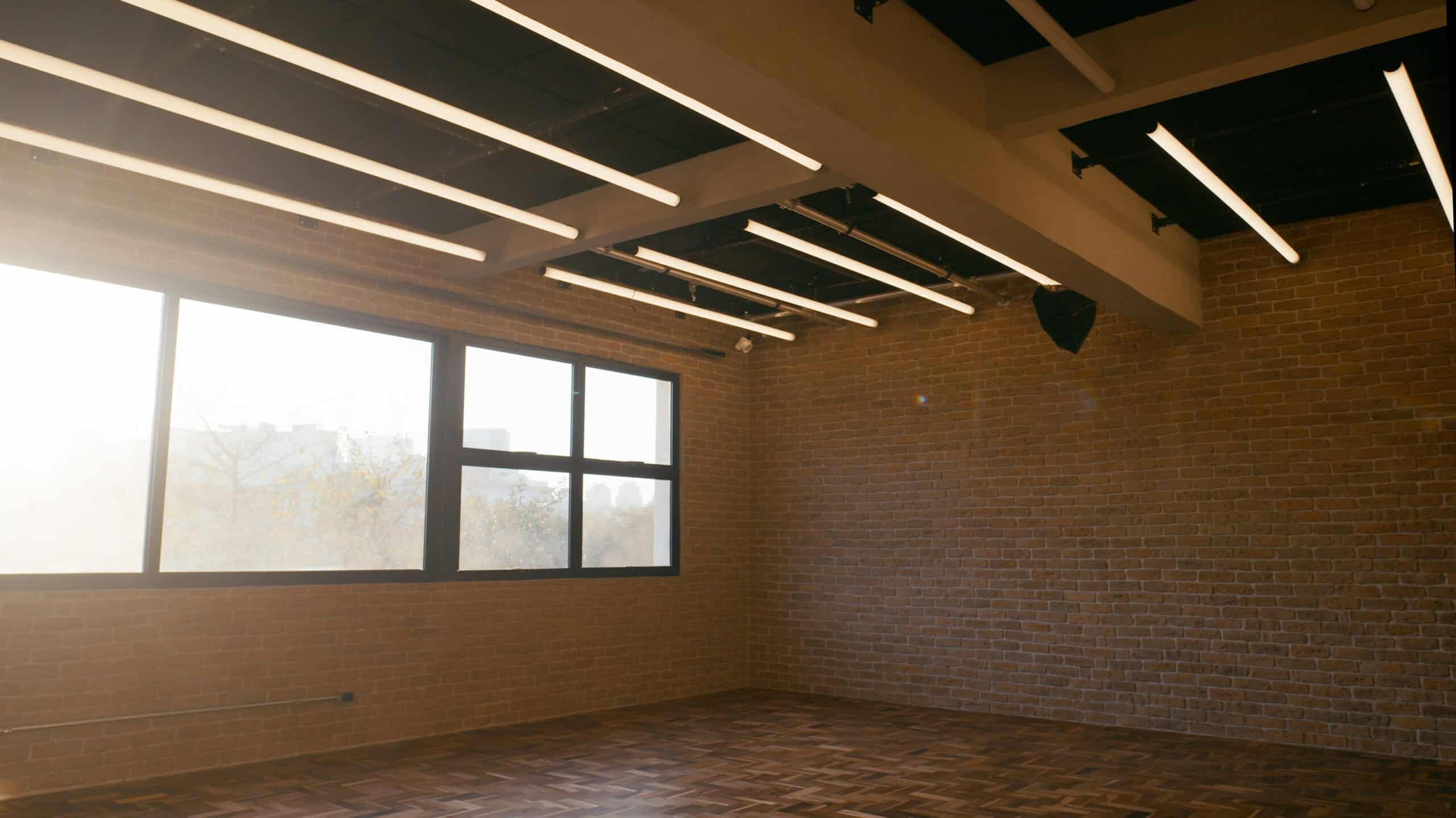
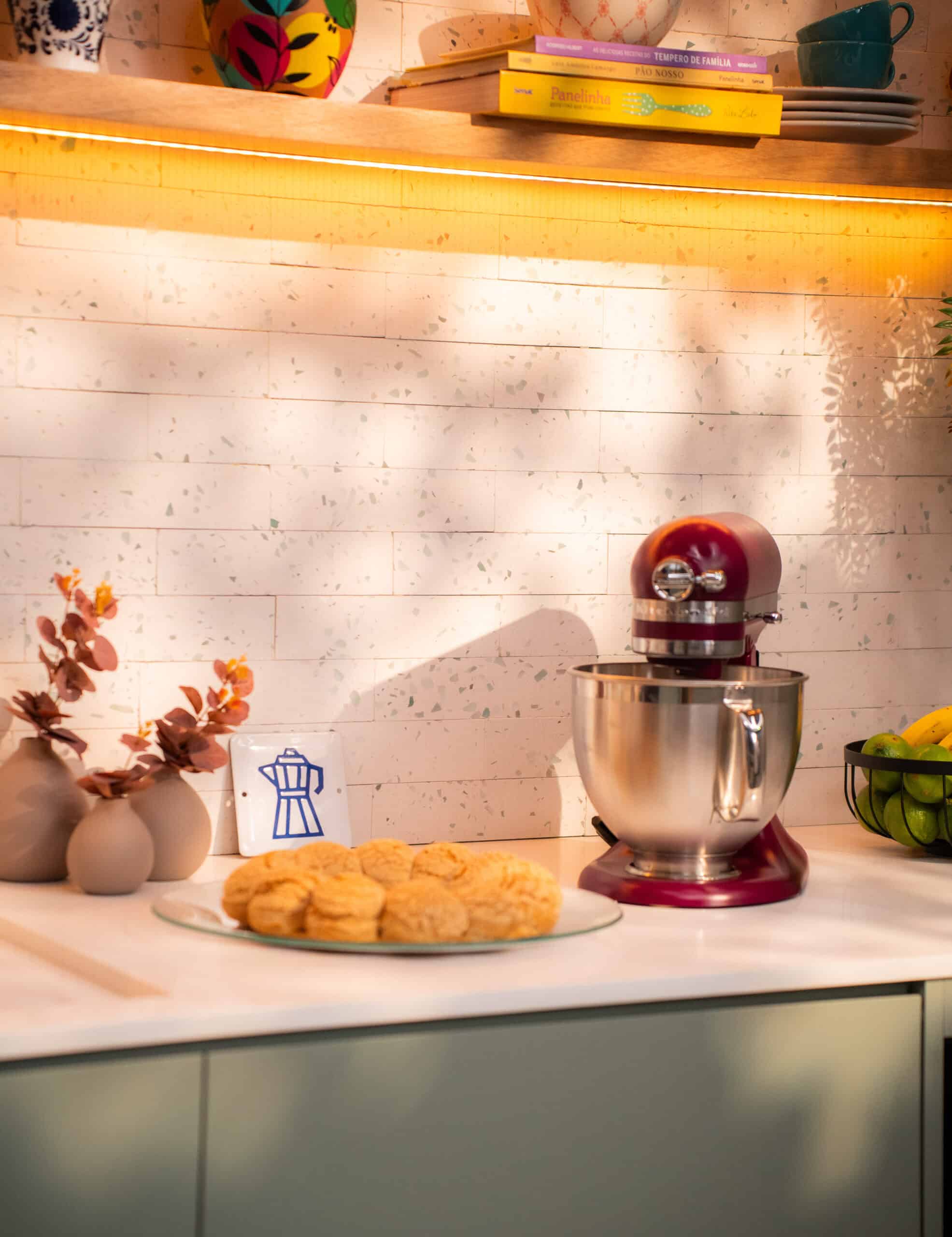
The recipe continues when the camera stops
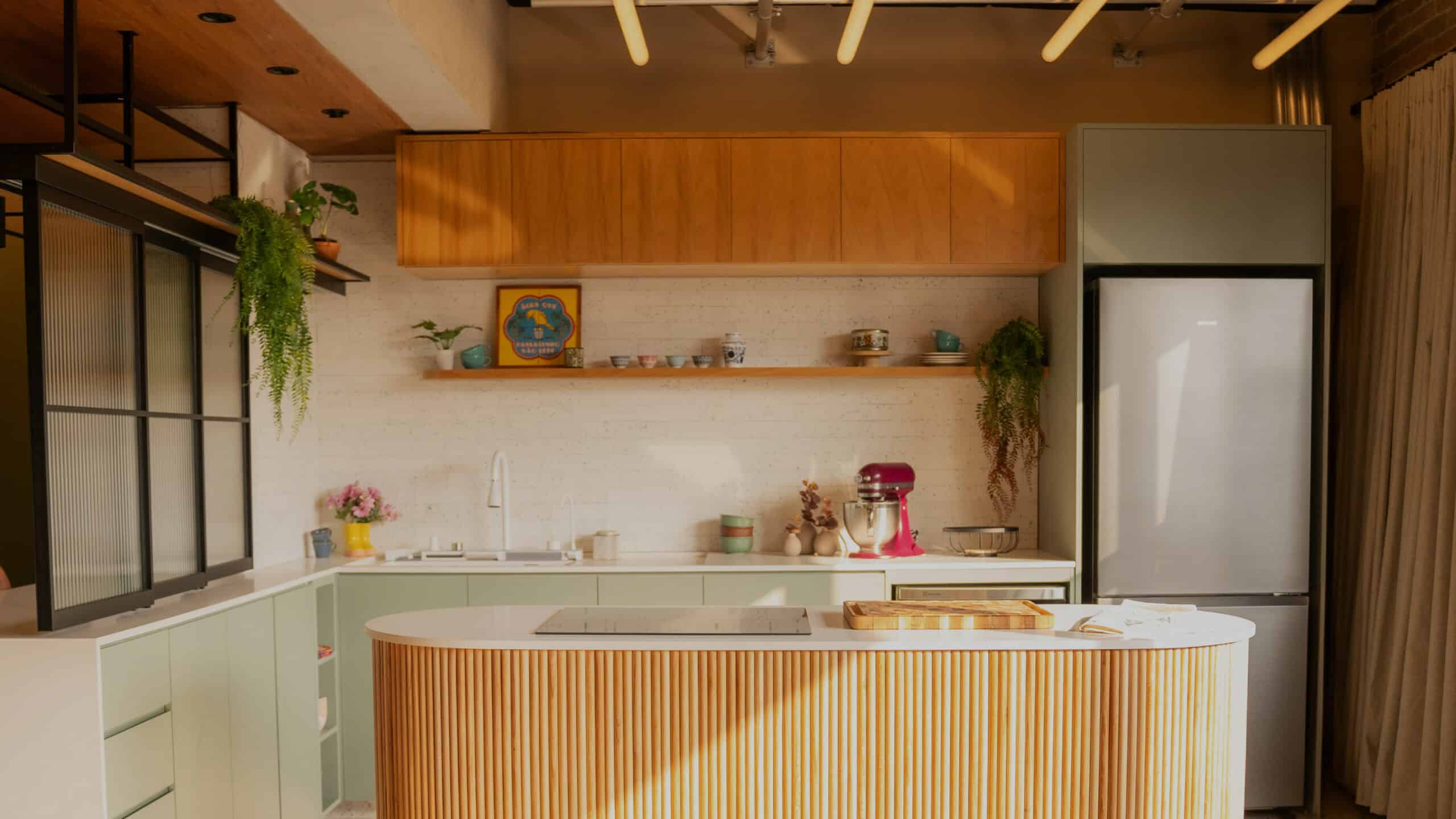
The oven, cooktop, refrigerator and utensils matter because the food still has to be prepared. Ask what works, which power outlets are available and whether the crew can use the equipment during the shoot.
A scenic kitchen can work when the finished dish arrives ready and the set only needs the final frame. Steam, frying and recipe changes make the operation as relevant as the look.
Circulation matters too. Food styling, direction, camera and the recipe tend to compete for the same counter during the take that looked simple on paper.
Anything leaving the frame needs somewhere to go
Used pans, packaging, boards, dishes and open ingredients pile up quickly. When everything stays on the hero counter, the crew starts reorganizing the kitchen halfway through the day.
Ask about the pantry, disposal, cleaning and support area. The structure can be compact as long as it is clear before the crew arrives and fits the amount of preparation.
Larger productions also need room for clients, agency, cases and breaks. That flow rarely appears in the location photo, but it always appears in the schedule.
Beautiful light still needs control
Large windows help, especially for photography and films with a natural frame. Daylight changes through the day, so blackout, a lighting grid and power remain part of the technical visit.
Bring the reference, check the direction of the windows and ask where the crew can place lights without blocking the kitchen. The visit becomes more useful once the main framing is roughly planned.
The final choice lives in the combination: a kitchen that cooks, an image that fits the campaign and a backstage area that fits the day.