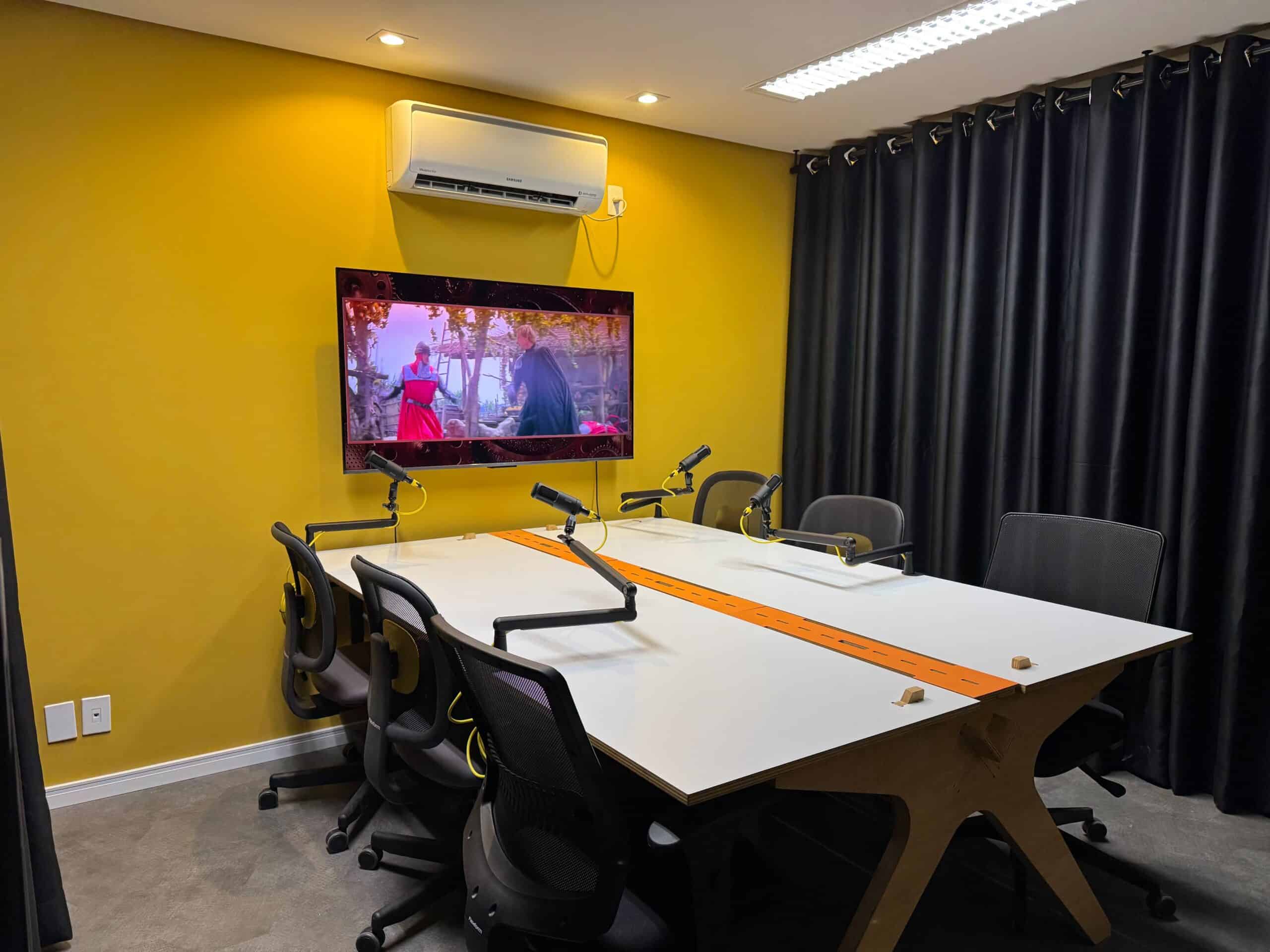
A table organises the encounter
When four people need to check notes, support material or lead a conversation with clear sections, the table helps organise the centre of the frame.
It also creates distance. Microphones, cameras and eyelines need to work without turning the furniture into a wall between guests.
MesaCast works well for panels, interviews, videocasts and branded conversations where structure is part of the language.
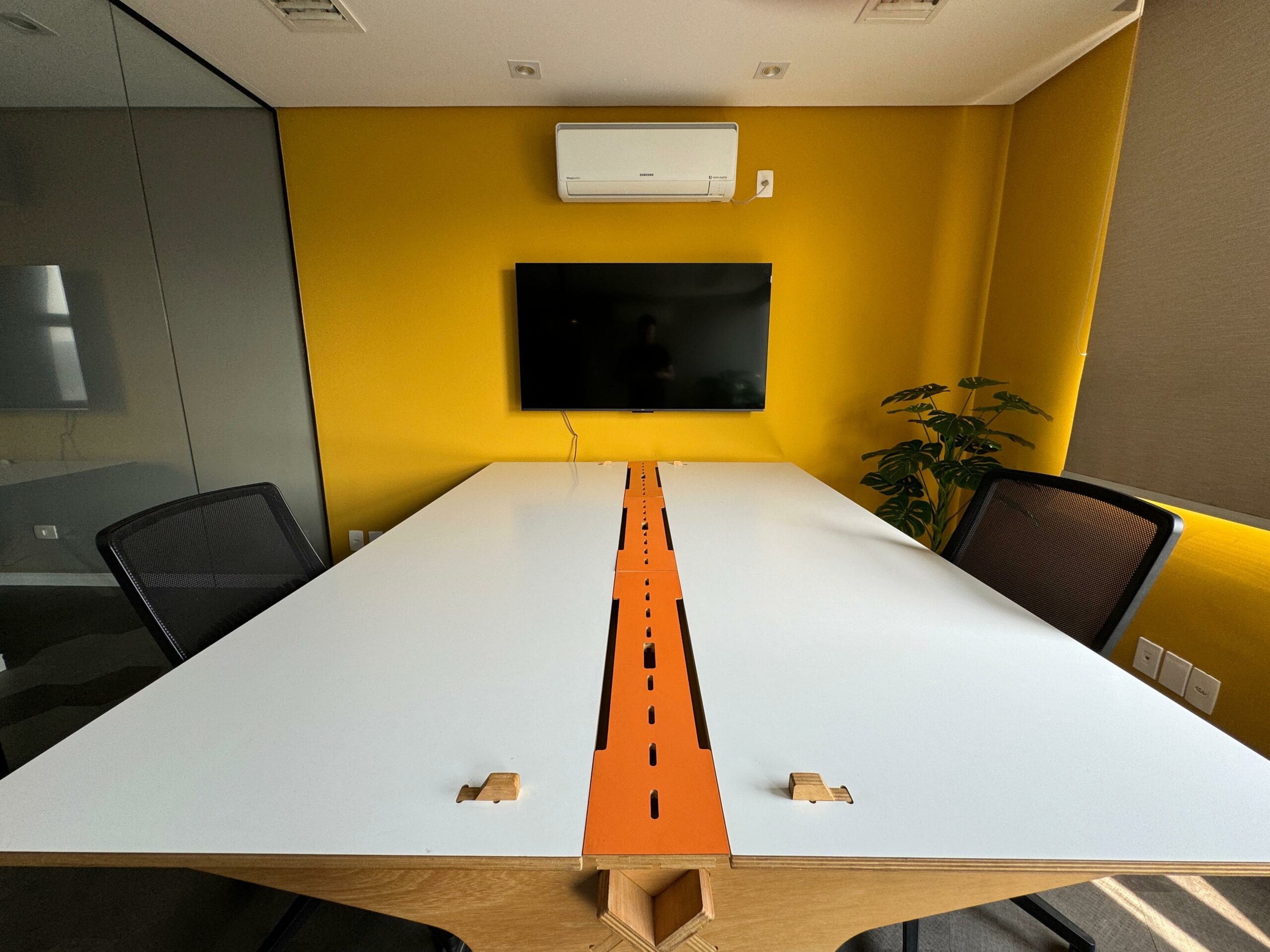
An armchair changes posture
Sitting at an angle, resting an arm and turning towards another person tends to make the conversation feel closer. The frame gains depth and the rhythm can become less formal.
This format needs careful eyelines. Each person should find the guest naturally while remaining well positioned for the cameras.
Armchairs suit interviews, personal stories and conversations where proximity helps more than a table full of objects.
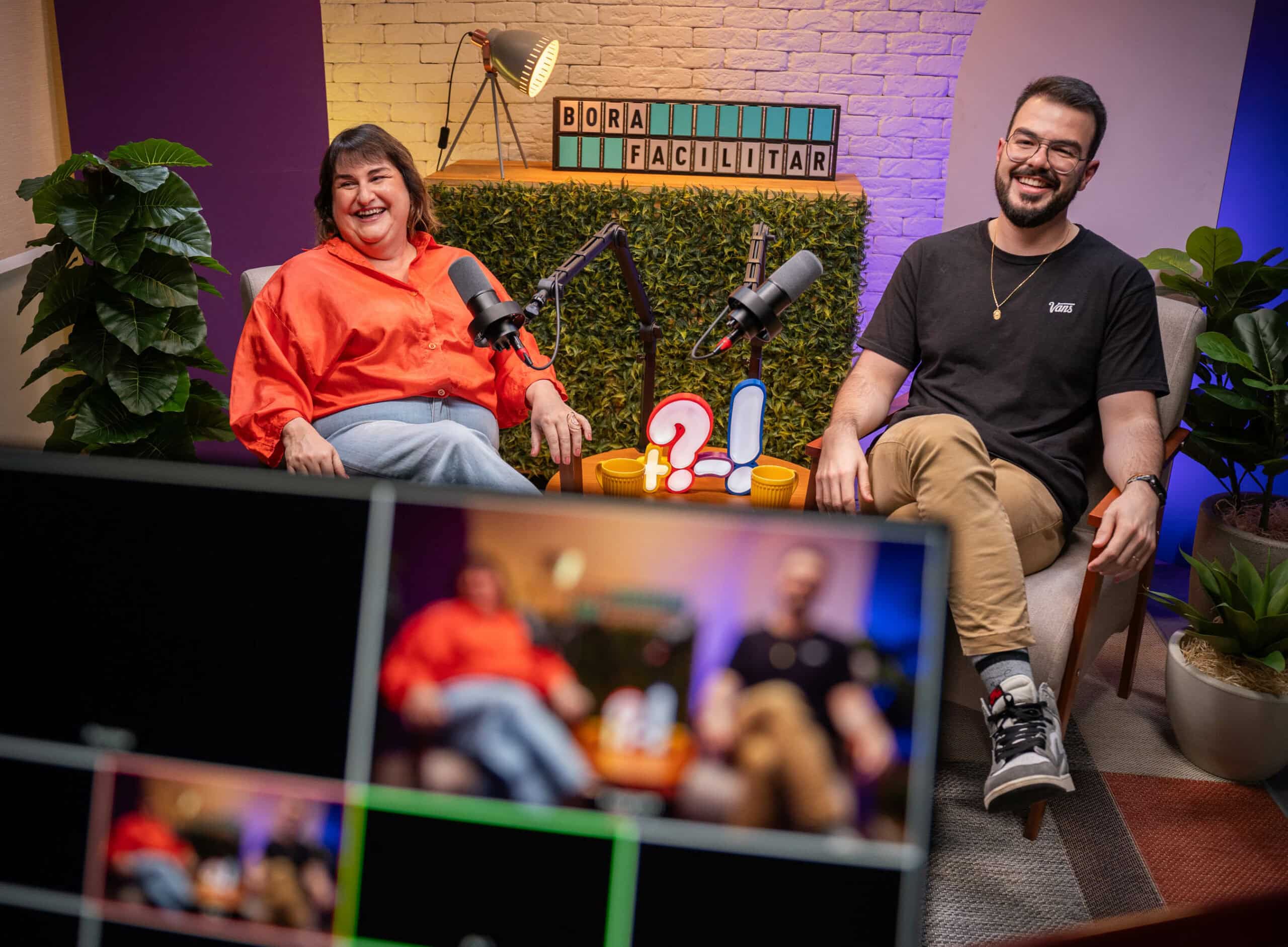
A finished episode starts before REC
Up to four participants means up to four microphones, plus cameras, lights, monitoring and room for the crew. The topic arrives with them, but the set needs to be ready before everyone sits down.
Ask how many cameras are included, how audio is recorded, where the client follows and what the delivery contains. Recording, editing, cutdowns and programme identity are separate stages and should be clear in the proposal.
When the set and conversation pull in the same direction, the format starts developing a personality before the opening titles.